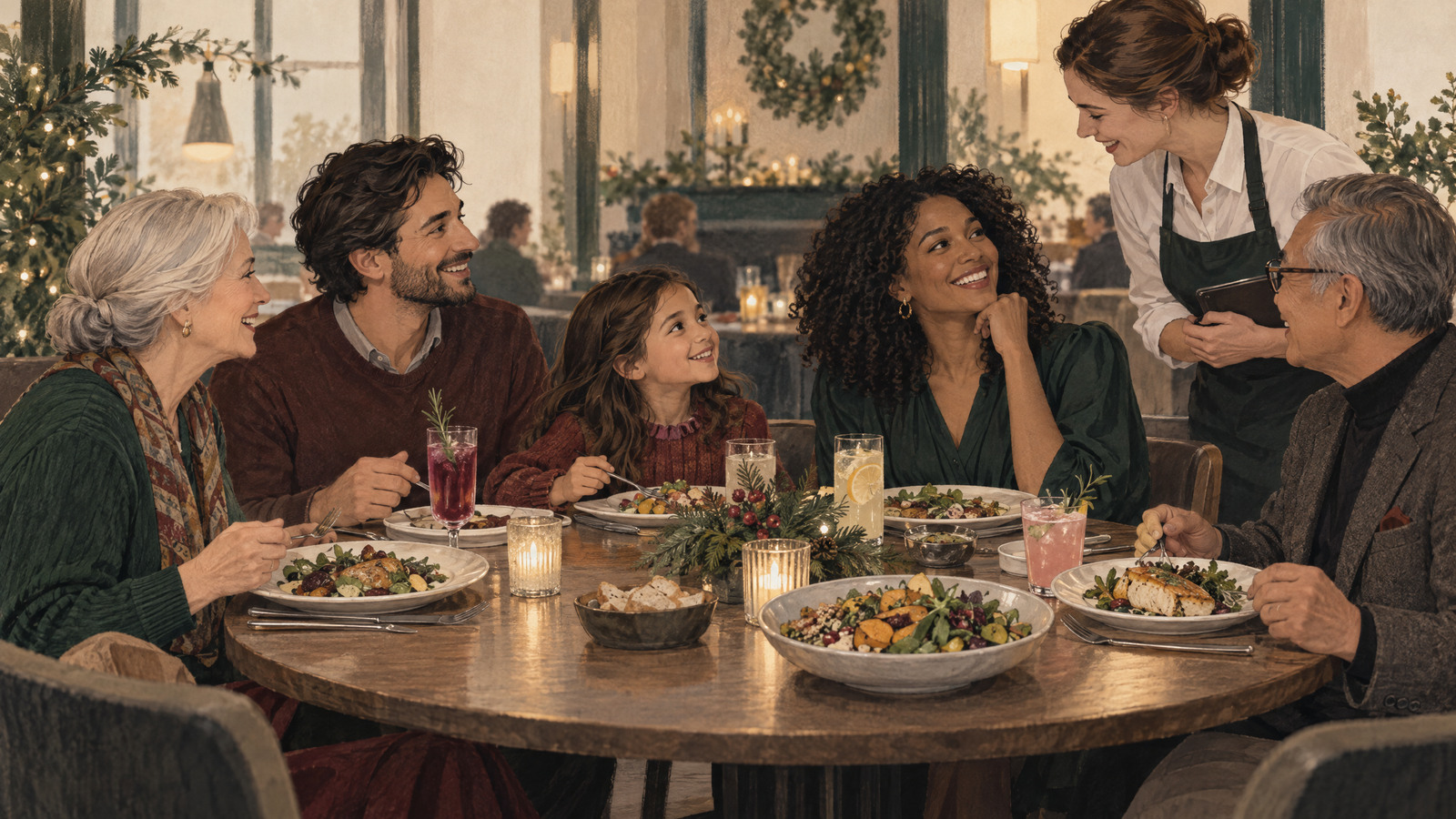
A guest considering a Christmas dinner booking should be able to picture their meal before they reserve. What will they eat if they don't want the roast? Can they choose a drink without alcohol? Will the children have to wait through the adults' starters?
Those questions deserve answers while people are deciding where to gather. Leaving them until arrival asks guests to commit to an evening they don't yet understand.
For a family restaurant or a dining room in a hotel, resort or club, this needn't mean a sprawling holiday menu. A few well-planned choices, described properly, can give different guests a place at the same table. And while the menu may say Christmas dinner, avoid assuming everyone has come to celebrate Christmas. Some may mark another holiday; others simply want a meal together.
Show guests the whole meal
Read the menu from the perspective of someone who avoids meat. Can they see a complete dinner, or will they have to ask which side dishes they can assemble into one?
A mushroom-and-lentil pie with potatoes, winter vegetables and a sauce made for the dish gives that guest something definite to consider. Plan its portion and presentation with the same care as the roast. The menu should describe the accompaniments too, so the guest knows what will arrive on the plate.
Before calling it vegetarian or vegan, review the pastry, stock, sauce and garnish as well as the filling. If the dish is vegetarian but not vegan, make that clear. “Vegetarian option available” leaves too much of dinner unexplained.
Give alcohol-free drinks similar attention. An apple-and-ginger drink or cranberry spritz could appear alongside the welcome drinks, with ingredients and a price. Develop and check the recipe before offering it: those combinations are starting ideas, not tested recipes. Staff need to know whether the ingredients contain alcohol. Don't use “non-alcoholic” and “alcohol-free” as interchangeable assurances.
Think beyond the welcome drink to what someone might choose with dinner and the tea or coffee afterwards. Let guests order a single drink without taking a package. When a set menu includes alcohol, explain the alternative and how it affects the price before booking. Nobody should have to negotiate a substitution at the table.
Agree on the children's pace
Some families want children's mains to arrive with the adults' starters. Others prefer everyone to eat their main course together. Ask the accompanying adult rather than treating early service as the automatic choice.
Record the agreed timing in the service notes, then confirm it at the table: “Would you still like the children's mains with the first course?” Plans can change, and a brief confirmation gives the family room to adjust without passing the same request through several servers.
Describe a smaller meal clearly, including what comes with it and whether dessert can arrive earlier. Avoid promising that any adult dish can be adapted. Families need to know the available choices, not discover their limits while ordering. Flexible pacing should help them enjoy the visit together without imposing a separate meal on the children.
Make the answers dependable before arrival
Publish the actual menu and prices before taking bookings. Include the non-meat main, drink alternatives and any substitution charges. For a group meal, say when main-course choices are due and who is responsible for collecting them. An organiser needs that information at the start, rather than a deadline introduced in a later email.
Ask about preferences and allergies separately. An organiser can collect menu choices, but each guest should also have a direct, private way to discuss an allergy with the restaurant. “One vegetarian, one gluten-free” isn't enough information to assess individual needs.
The chef or kitchen lead should review each allergy request and confirm whether it can be accommodated. A meat-free dish may contain allergens; removing an ingredient or garnish doesn't establish that a meal is safe. Apply the same care to allergy questions about drinks.
Give servers the kitchen's confirmed answer so they can explain it accurately without improvising a promise. If the team can't make the commitment a guest needs, say so before that guest relies on the booking.
By service time, the menu descriptions, drink prices, children's timings and individual dietary responses should be settled and available to the people serving the table. Guests can then spend less of their visit sorting out dinner and more of it enjoying the company they came for.