Published: April 2026
The Canadian foodservice industry is facing unprecedented financial pressure in 2026. With 46% of operators expecting their profitability to worsen this year, the primary culprit is clear: a volatile trade environment [1]. The ongoing trade war and recent tariffs have caused Canadian restaurant operators to spend an average of 37% more on food [2].
As overall food prices in Canada are forecasted to increase by 4% to 6% in 2026, the industry is feeling the squeeze [3]. With 7,000 restaurants having closed in 2025 and another 4,000 expected to shutter this year, survival requires immediate, strategic action [3]. Here is how resilient Canadian operators are navigating the 2026 tariff storm.
The Impact of Tariffs on the Bottom Line
Food costs remain the top concern for 88% of Canadian operators, closely followed by labor costs at 89% [1]. The reliance on imported goods, particularly from the U.S., has left many restaurants exposed to sudden price hikes.
Currently, 41% of foodservice businesses in Canada are operating at a loss or just breaking even—a stark contrast to the 12% reported five years ago [1]. To combat this, 71% of operators increased menu prices by an average of 13% in 2025 [1]. However, continuously raising prices risks alienating an already price-sensitive consumer base.
Strategic Supplier Diversification and Local Sourcing
To reduce exposure to volatile import costs, Canadian restaurants are rethinking their supply chains.
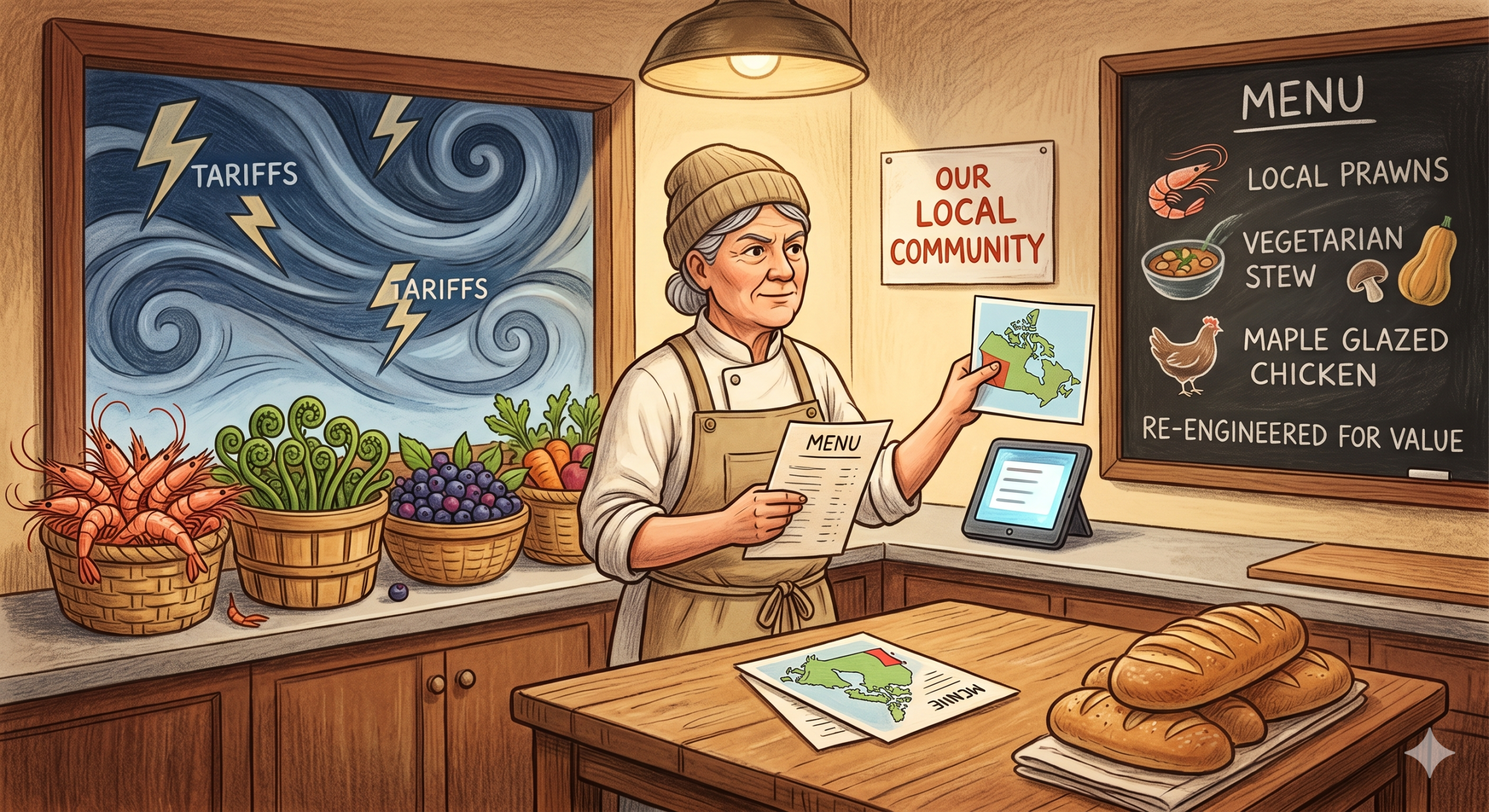
- Pivoting to Local Ingredients: According to industry reports, 43% of operators are planning to use more local ingredients to bypass tariffs and reduce reliance on U.S. imports [1]. Sourcing locally not only stabilizes costs but also appeals to consumers who prioritize supporting domestic agriculture.
- Broadening the Supplier Base: Relying on a single broadline distributor is no longer viable. Operators are now maintaining relationships with multiple suppliers for core ingredients. This diversification provides leverage during price negotiations and ensures continuity if one supplier faces shortages or sudden price hikes.
Menu Re-Engineering for Margin Protection
When ingredient costs fluctuate wildly, static menus become a liability. Operators are aggressively re-engineering their offerings to protect margins.
- Adding Vegetarian Options: With meat prices significantly impacted by tariffs, 30% of operators are adding more vegetarian options to their menus [1]. Plant-based ingredients generally offer better cost stability and higher profit margins.
- Streamlining Offerings: Reducing the total number of menu items minimizes the variety of ingredients required, which in turn reduces waste and simplifies inventory management.
- Limiting Specials: While daily specials are great for marketing, they often require unique, imported ingredients. Limiting these in favor of specials that utilize existing, locally sourced inventory helps control costs.
Leveraging Technology to Offset Costs
To survive the tariff storm, Canadian restaurants are turning to technology to find efficiencies in both front- and back-of-house operations.
- Predictive Analytics: AI tools are being used to accurately predict food usage based on historical data, weather, and local events. This ensures restaurants only buy what they need, drastically reducing food waste.
- Optimizing Labor: With labor costs matching food costs as a primary concern, AI-driven scheduling tools help ensure that restaurants are staffed efficiently, avoiding unnecessary overtime while maintaining service quality.
Conclusion
The 2026 tariff environment presents a formidable challenge for Canadian restaurants. However, by diversifying suppliers, embracing local sourcing, strategically re-engineering menus, and leveraging technology, operators can weather the storm. Those who adapt quickly will not only survive but position themselves for long-term profitability when the economic climate stabilizes.
References
- Restaurants Canada. “2025 Foodservice Sales Buffered by GST Holiday, As Rising Operating Costs and Tariffs Cut Into Profits, Restaurants Brace for More Obstacles in 2026.”
- National Post. “2026 Canadian State of Restaurants Report.”
- Dalhousie University, Agri-Food Analytics Lab. “Canada’s Food Price Report 2026.”