Published: April 2026
The 2026 FIFA World Cup is set to be the largest sporting event in history. Spanning from June 11 to July 19, 2026, the tournament will be hosted across 16 cities in the United States, Canada, and Mexico [1]. For the hospitality industry, this is not just a series of games; it is a multi-week economic engine.
Projections indicate the World Cup will generate an astonishing $40.9 billion in GDP across North America [2]. Host cities in the U.S. alone are expecting between $160 million and $620 million in economic activity, with cities like Kansas City bracing for an influx of approximately 650,000 visitors [2] [3].
For restaurants, the opportunity is massive, but capitalizing on it requires far more than simply turning on a television. The rush will test operational limits, staffing models, and supply chains. Here is the playbook for U.S. and Canadian restaurants to maximize revenue during the 2026 World Cup.
1. Engineer Match-Day Menus for Volume and Margin
During high-stakes matches, kitchens will be slammed. The goal is not to offer endless choices, but to provide fast service, strong contribution margins, and clear guest decisions.
- Tighten the Menu: If a dish slows the line, creates prep complexity, or drags down your margin, remove it from your match-day menu. High-volume moments reward focus.
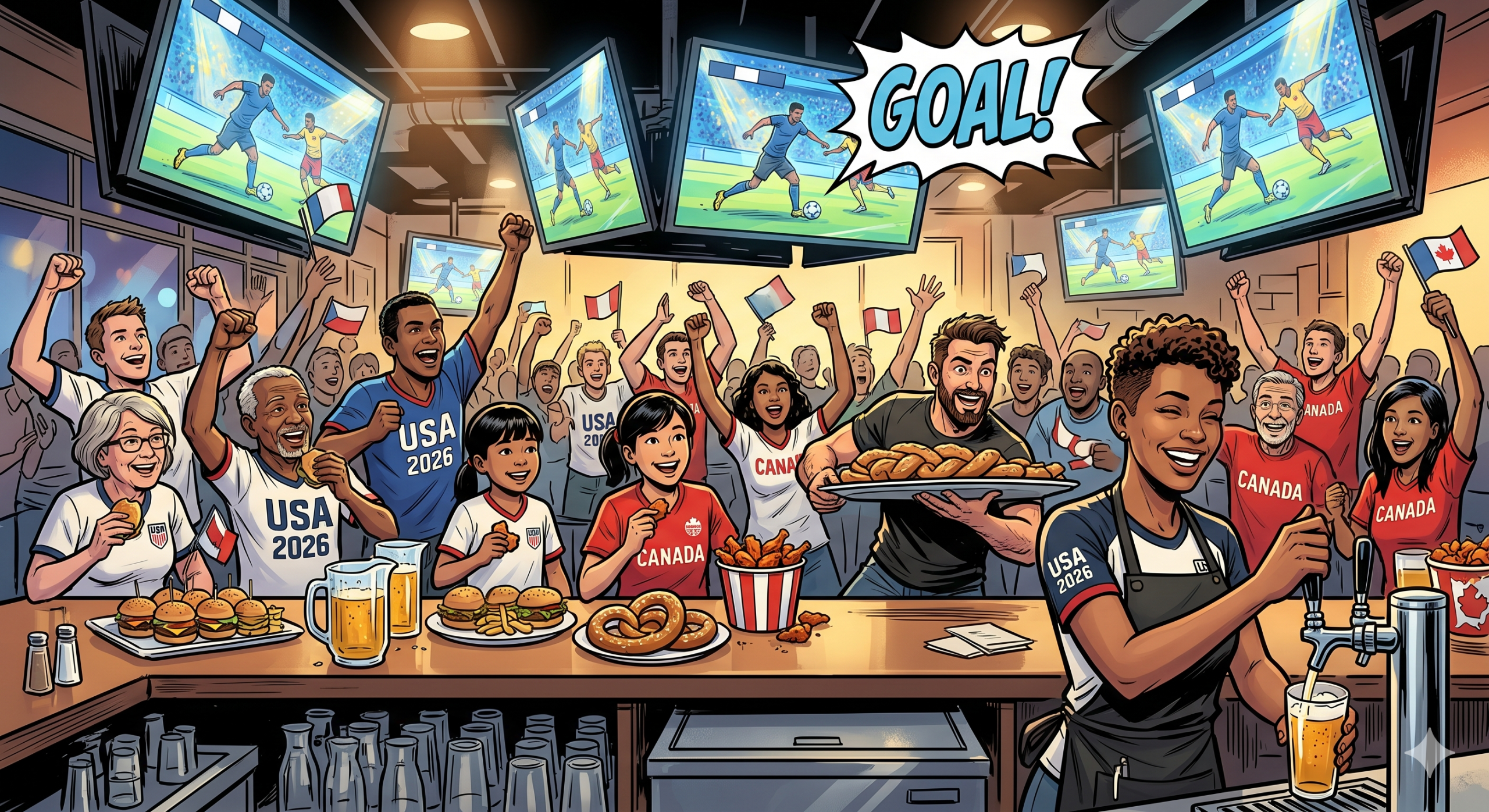
- Build Shareable Bundles: Start with items that are easy to share, easy to upsell, and easy for the kitchen or bar to produce during volume spikes. Think platters, snack bundles, beer-and-app combos, pitchers, and family-style trays [1].
- Pre-Order Packages: For off-premise demand, create pre-order catering packages that travel well and are simple to execute consistently throughout the tournament [1].
2. Staff for Peaks, Not Averages
The influx of tourists and locals flocking to watch parties will create intense, concentrated periods of demand. Traditional staffing models based on historical averages will fail.
- Data-Driven Scheduling: Use your POS data from previous major sporting events (like the Super Bowl or local championships) to model the expected surges. Schedule your strongest teams during these peak windows.
- Cross-Train for Flexibility: Ensure your staff is cross-trained so you can dynamically shift labor to where the bottleneck is—whether that’s the bar, the host stand, or the kitchen.
- Brief and Train: Your staff must be fully briefed on the match schedule, the specific promotions running that day, and the expected pace of table turnover.
3. Streamline Service for International Guests
The World Cup will bring a diverse, global audience into your restaurant. Making the guest experience seamless from kickoff to checkout is crucial for turning event traffic into positive reviews and repeat business.
- Transparent Tipping: Tipping cultures vary wildly around the world. While official U.S. travel guidance suggests tipping 15 to 20 percent for a sit-down meal, many international visitors may not be accustomed to this [1]. Make tipping transparent by clearly labeling any service charges or auto-gratuities, and train staff to politely explain that gratuity is not included unless noted.
- Frictionless Payment: Ensure your POS system can easily handle split checks and multiple payment methods, including international credit cards and mobile wallets.
- Clear Communication: Ensure menus are easy to read, with clear descriptions and visible allergy information.
4. Market the Tournament as a Series
The World Cup is a marathon, not a sprint. Your marketing strategy should reflect this.
- Promote Early and Often: Don’t wait until the week before the tournament starts. Begin promoting your match-day specials, watch party setups, and reservation policies well in advance across all digital channels.
- Be Specific: Customers need to know exactly what to expect. Communicate your opening times (especially for early or late matches), whether the sound will be on for the games, what specials are running, and if reservations are required or if it’s first-come, first-served.
- Navigate Trademarks Carefully: The terms “FIFA World Cup,” “World Cup,” and official logos are heavily protected trademarks. Ensure your marketing materials comply with FIFA’s public viewing regulations to avoid legal issues [1]. Focus your marketing on the energy of the event, the competing countries, and your specific offerings rather than using official branding.
5. Turn Event Traffic into Repeat Business
The ultimate win during the World Cup is capturing new customers and turning them into regulars.
- Data Capture: Use online ordering, digital waitlists, or your loyalty program to capture guest details.
- Follow-Up Campaigns: Create targeted follow-up offers that incentivize guests who visited during a match to return on a regular Tuesday night.
Conclusion
The 2026 FIFA World Cup is a generational opportunity for restaurants in the U.S. and Canada. By executing a focused menu strategy, staffing intelligently, catering to international guests, and marketing effectively, operators can transform the tournament rush into sustained profitability.